
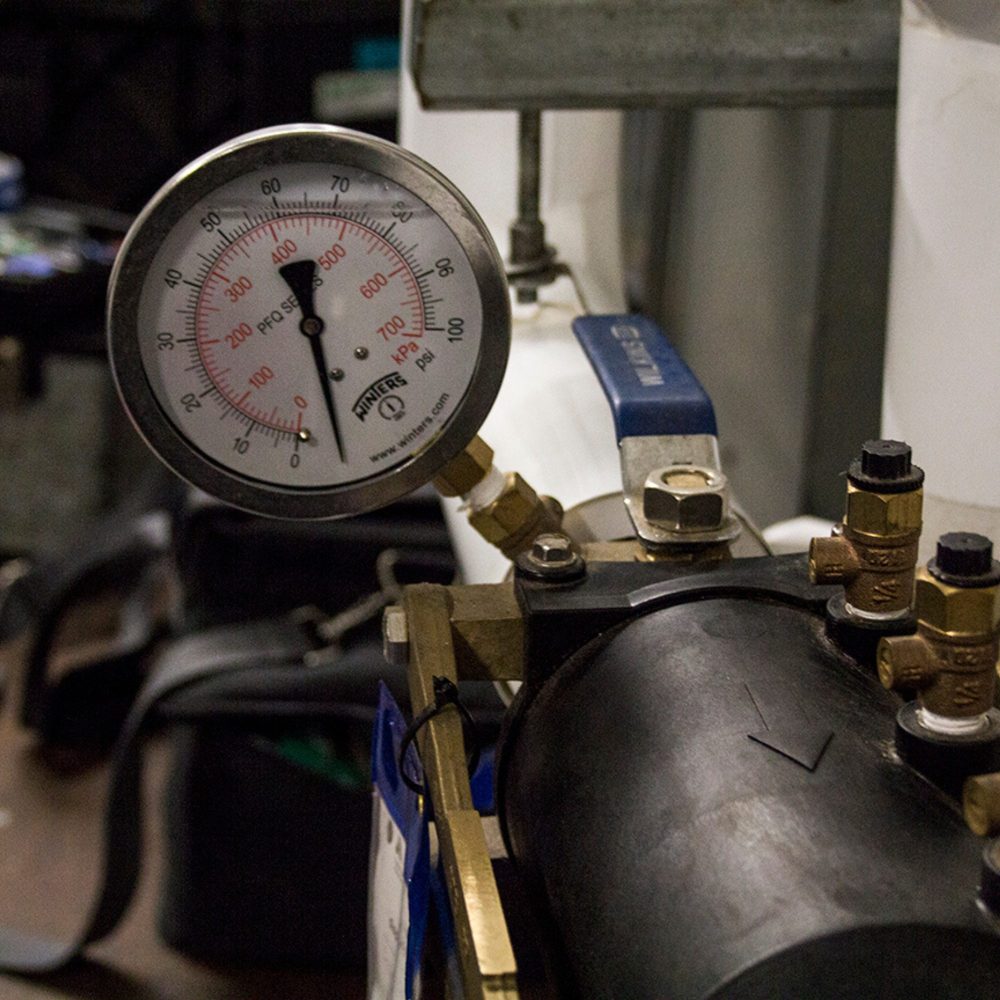
How does a Backflow Prevention Device (BPD) work?
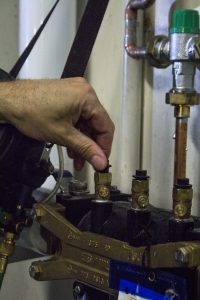 Reduced Pressure Principle Backflow Preventer Assembly (RP) and Double Check Valve Backflow Preventer Assembly (DCVA) are designed to prevent water from coming back in the wrong direction and thus protect the drinking water network from backflow. They use valves held closed by springs. For water to pass through the device, the network pressure must first exceed the resistance created by these springs.
If back pressure or siphoning occurs, the valves close automatically to prevent contamination of the drinking water supply.
Why does a BPD cause a pressure drop?
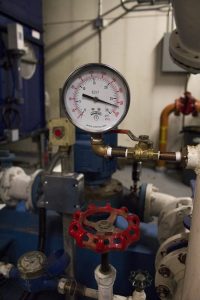
Since the water must pass through the spring-loaded check valves, some pressure loss is inevitable. This loss is part of the device’s normal operation and is the price to pay to ensure network protection.
Typically observed pressure losses are:
- RP: approximately 8 to 12 psi*
- DCVA: approximately 3 to 8 psi*
*The higher the water flow rate, the greater this loss. This is caused by increased friction, pressure drop, and water turbulence within the device.
What happens when a BPD deteriorates?
Annual inspection confirms that the valves, springs and sealing components are functioning according to the manufacturer’s specifications and thus comply with CSA B64.10 standard.
 Like all mechanical equipment, a backflow prevention device is subject to wear. When certain components begin to deteriorate, flow resistance can decrease. Water then flows through the device more easily, reducing head loss and potentially increasing available pressure at the points of use. In these circumstances, the BPD is no longer compliant and must be replaced or repaired.
However, a loss of pressure is often noticed:
- on upper floors,
- during periods of high consumption,
- in buildings where available pressure is already limited.
Does repair eliminate pressure loss?
No, on the contrary! A backflow prevention device in good condition will always create some pressure loss.
During a repair, the valves, springs and other worn components are replaced with new parts. The goal is to restore the device’s original performance, not to eliminate the pressure loss that is part of its normal operation.
Key takeaway
Although a backflow prevention device is not usually the primary cause of a pressure drop, it directly affects the available pressure in the system. Since the water must pass through these internal components, some head drop is always present.
Article written by : Jérémy Medeiros
References:
- Calcady. (2026). RPZ backflow pressure loss calculator. https://calcady.com/trade/plumbing/rpz-backflow-pressure-loss/ [calcady.com]
- Toolgrit. (2026). Backflow preventer sizing calculator. https://www.toolgrit.com/tools/backflow-preventer-calc [toolgrit.com]
- Piping Technology System. (s. d.). Check valve pressure drop calculation formula. https://pipingtechs.com/check-valve-pressure-drop-calculation-formula/ [pipingtechs.com]
- EZ Virtual Tools. (s. d.). Check valve pressure drop calculator. https://hydraulics.ezvirtualtools.com/calc/check-valve.html [hydraulics… ltools.com]
- Municipality of Sainte-Brigitte-de-Laval. (n.d.). L’installation d’un régulateur de pression d’eau potable. https://sbdl.net/capsules-municipales/linstallation-dun-regulateur-de-pression-deau-potable/ [sbdl.net]
- Atlas Backflow Services. (2025). Can a backflow preventer cause low water pressure in my building? https://www.atlasbackflow.com/post/can-a-backflow-preventer-cause-low-water-pressure-in-my-building-1